
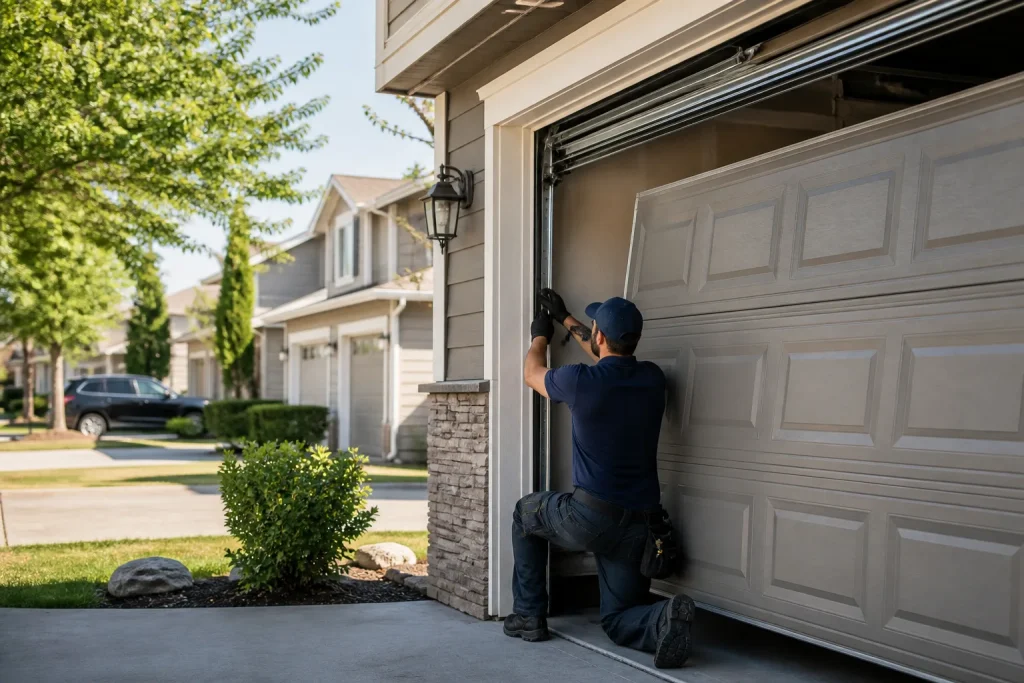
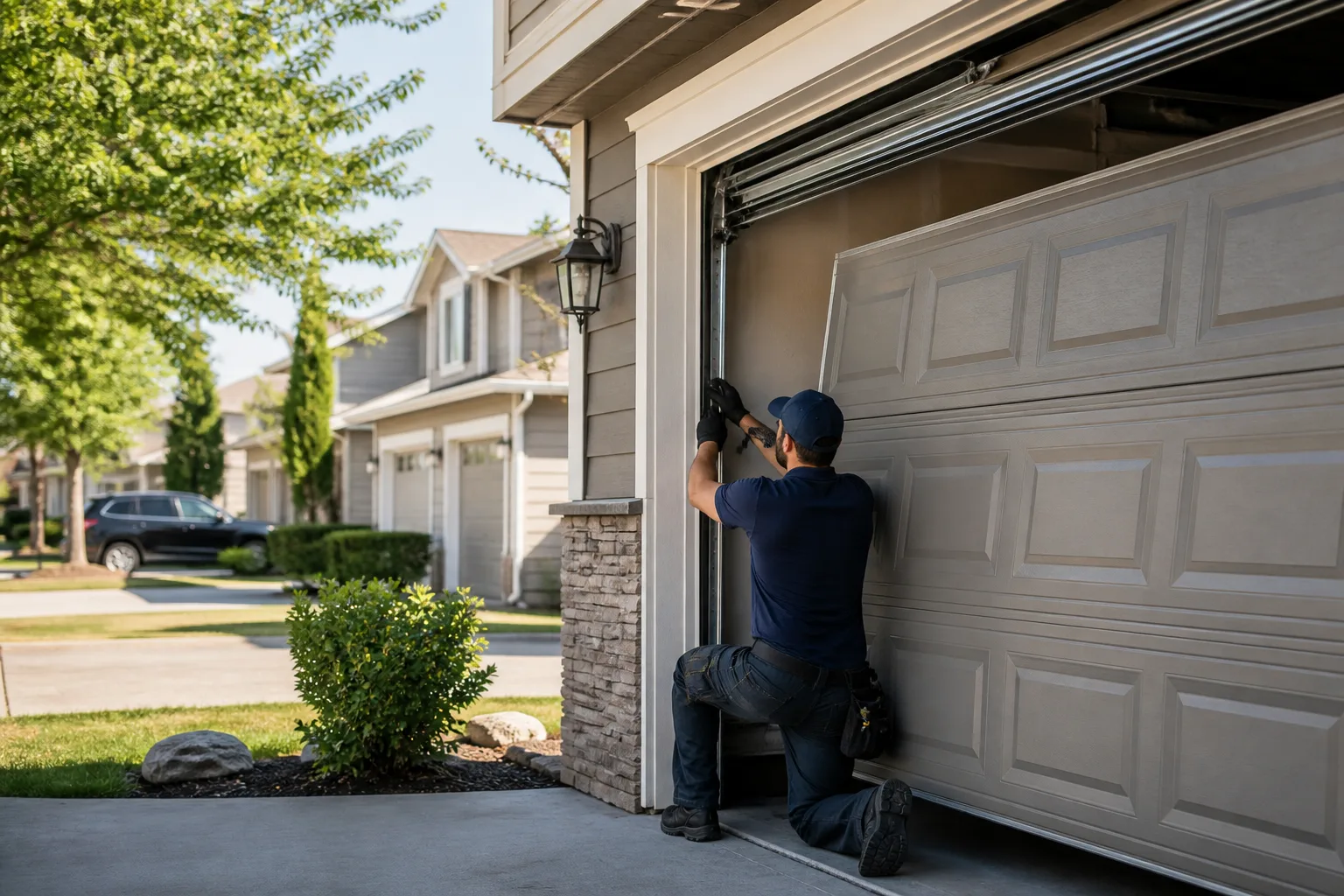
Amarr Garage Door Repair in Sacramento: A Homeowner’s Guide
Amarr garage door repair in Sacramento typically runs $180–$520 depending on whether you’re dealing with a broken spring, section damage, or opener-related issues, and most repairs can be completed same-day by a technician who actually stocks Amarr-compatible hardware. The critical detail most Sacramento homeowners miss: Amarr’s tighter panel-to-hardware tolerances mean generic replacement parts often fail faster than the originals they’re replacing. If you’d rather not sort through model numbers and bracket specs yourself, Vanguard Garage Door California carries OEM-equivalent Amarr hardware and offers free estimates — call (888) 430-4880.
Here’s the thing about Amarr that doesn’t get talked about enough. Their doors are built with panel-to-hardware tolerances tighter than most builders-grade options you’ll see in Sacramento tract homes. That’s why they operate smoother and look cleaner installed. It’s also why a technician who grabs generic hinges or bottom brackets from a van stock bin — the same parts he uses on three other brands that morning — will often leave you with a door that chatters, binds, or separates at the joints inside of eight months. We’ve been called out to fix those “repairs” in Land Park, Natomas, and over in El Dorado Hills more times than I can count.
How to Identify Your Amarr Model Series
Before you can evaluate any repair quote, you need to know what you’re actually working with. Amarr stamps model information on the interior face of the door, usually on an end stile or the top section. Here’s what Sacramento homeowners should look for:
- Classica series — stamped “CH” or “Classica”; three-layer steel with embossed carriage-house styling; common in 2005–2015 East Sacramento renovations
- Heritage series — stamped “CC” or “Heritage”; traditional raised-panel, two-layer steel; the volume seller you’ll see throughout Folsom and Roseville
- Oak Summit — stamped “OS”; wood-grain composite overlay; heavier door, needs specific hinge reinforcement
- Lincoln — stamped “LI”; entry-level single-layer; common in newer Elk Grove and Natomas builds
- Stratford — stamped “ST”; mid-grade two-layer; the “safe” replacement choice we see spec’d by Sacramento-area builders
The stamp matters because bracket hole spacing, hinge gauge, and track radius specs vary across lines. A Classica CH series uses 14-gauge hinges at the #1 and #2 positions; a Lincoln LI might ship with 18-gauge. Mix those up and your roller shafts walk in the brackets inside two seasons. We’ve pulled doors apart in Sacramento garages where a previous installer used universal hinges on a Classica and the elongated holes had wallowed out to the point the sections were separating at the joints.
Common Amarr Failure Points (And Why Generic Parts Make Them Worse)
After 18 years in the trade, we’ve tracked patterns across brands. Amarr has three failure modes that show up repeatedly in Sacramento’s climate — hot, dry summers that bake lubricants off hardware, followed by wet winters that let moisture into any gap it can find.
Bottom bracket wear. Amarr’s bottom fixtures carry more load than most because of their panel design. When the nylon bushing wears (usually 8–12 years in Sacramento), the roller shaft starts metal-on-metal contact. Generic replacement brackets often have softer nylon or slightly different shaft angles. The door develops a wobble on descent, which stresses the cable, which then frays. We’ve replaced cables in Pocket-Greenhaven homes where the root cause was a $12 generic bracket installed two years prior.
Section joint separation on CH and CC series. The interlock profile on older Classica and Heritage doors is precise. If a technician replaces a damaged section with non-Amarr stock, or uses a generic hinge that doesn’t seat the interlock fully, the gap opens. Moisture gets in. The steel starts edge rust. In Sacramento’s Central Valley sun, that rust accelerates once it starts.
Spring anchor bracket fatigue. Amarr’s anchor brackets are stamped to a specific geometry that mates with their track radius. Generic anchors with wider or narrower spring pads change the coil geometry. The spring life drops. We’ve measured it — springs on generic anchors last 30–40% fewer cycles in our tracking.
When to call a pro: If you’re seeing gaps between door sections, hearing metal-on-metal grinding at the bottom corners, or noticing the door “walks” side-to-side during travel, the underlying hardware issue is usually beyond a homeowner lubrication fix. Torsion spring work is genuinely dangerous — the stored energy can cause serious injury — and we don’t recommend DIY for that component on any brand.
Amarr Warranty Realities: What Repairs Void Coverage
Amarr’s limited warranty covers section rust-through and hardware defects for original purchasers, but it has teeth. We’ve read the claim denials. Here’s what actually voids coverage versus what doesn’t:
- Voided: Using non-Amarr replacement sections; modifying track geometry; homeowner-installed opener brackets not using Amarr’s specified reinforcement points
- Not voided: Professional repair using OEM-equivalent hardware; spring replacement by a qualified technician; routine maintenance and lubrication
- Gray area: Section replacement after impact damage — Amarr typically treats this as non-warranty regardless of who repairs it, but using genuine Amarr sections preserves any remaining coverage on unaffected components
The practical point for Sacramento homeowners: if your door is under 10 years old, ask your technician whether they’re using Amarr-compatible or truly generic hardware. Document it. If a warranty claim ever matters, that detail will.
OEM-Equivalent vs. Generic: The Hardware Difference
We don’t stock every part from every manufacturer — no independent shop can afford that inventory. What we do is source OEM-equivalent hardware from suppliers who reverse-engineer to Amarr’s actual tolerances, not “fits most residential doors” specs. Here’s how to tell what you’re getting:
| Component | OEM-Equivalent Spec | Generic Typical | What to Ask Your Technician |
|---|---|---|---|
| Hinges (#1–#4) | 14-gauge steel, Amarr hole pattern | 16–18 gauge, universal pattern | “What gauge and what hole spacing?” |
| Bottom brackets | Nylon bushing rated 100K cycles | Basic nylon, 30–50K cycles | “What’s the bushing material and rating?” |
| Roller wheels | 6200Z bearing, 2″ stem, 7/16″ shaft | Basic bearing, variable stem | “Stem length and bearing grade?” |
| Spring anchor | Amarr-specific spring pad width | Universal fit | “Does this match my door’s track radius?” |
The $40–$80 you might save on generic hardware upfront typically costs $200–$400 in premature replacement labor within three years. In Sacramento’s market, that’s not theoretical — we see it regularly.
Questions to Ask Before Any Technician Touches Your Amarr Door
These five questions separate technicians who know Amarr from those who’ll figure it out on your time:
- “What Amarr series have you worked on this month?” — Vague answers mean van-stock generica.
- “Do you carry 14-gauge hinges, or will you need to order?” — If they don’t stock them, they’re not doing enough Amarr work.
- “What’s your spring cycle target for this door weight?” — Amarr doors run heavier than they look; under-spec’d springs fail early.
- “If a section is damaged, do you source Amarr-compatible or universal?” — Universal sections won’t interlock correctly.
- “Will this repair affect any remaining manufacturer warranty?” — A technician who can’t answer hasn’t read the terms.
Related services in Sacramento: If you’re comparing repair versus replacement, our Garage Door Installation in West Covina page walks through how we spec doors for California’s climate zones. For opener issues tied to your Amarr system, see Garage Door Opener in West Covina.
What Amarr Repair Costs in the Sacramento Market
We don’t publish flat rates because door conditions vary, but here’s what Sacramento homeowners should expect for common Amarr repairs when using proper hardware:
- Spring replacement (torsion, pair): $280–$420 — includes calibrated weighing, cycle-matched springs, and safety cable inspection
- Bottom bracket and roller replacement (both sides): $180–$260 — OEM-equivalent brackets, sealed-bearing rollers
- Hinge replacement (full set, 1–4): $220–$340 — gauge-matched to series, not universal
- Section replacement (single, Classica/heritage): $380–$520 — sourced to match existing embossing and color
- Full hardware refresh (springs, hinges, rollers, brackets): $580–$780 — typical for 15+ year doors in Arden-Arcade, Carmichael, Fair Oaks
These ranges assume standard 16×7 or 16×8 single-car and double-car configurations. Custom sizes, wood-overlay Amarr lines, or accessibility modifications run higher. We provide exact quotes before starting work — no diagnostic fees, no pressure.
The Bottom Line
Amarr builds a better-than-average door, but that quality creates a narrower repair path than bargain brands. Generic hardware fits physically; it doesn’t function correctly long-term. For Sacramento homeowners, the key takeaways are simple: identify your series, verify your technician’s hardware specs, and understand that Amarr’s tolerances are a feature — not a problem to be solved with universal parts.
If you’re in Sacramento and need help diagnosing an Amarr issue, or you want a second opinion on a quote that seems light on hardware detail, Vanguard Garage Door California offers free estimates. Henry and his team carry 18 years of exclusive garage door experience, 393 verified reviews averaging 4.9 stars, and we stock OEM-equivalent Amarr hardware for same-day repair. Call (888) 430-4880.
Frequently Asked Questions
Most Amarr repairs in Sacramento run $180–$520, with spring replacement typically $280–$420 and full hardware refreshes around $580–$780 for standard 16-foot doors. Costs vary by series, door size, and whether OEM-equivalent or generic hardware is used. Call (888) 430-4880 for an exact quote — estimates are free.
Generic parts physically fit but often fail prematurely because Amarr’s panel-to-hardware tolerances are tighter than builders-grade doors. We’ve seen generic hinges cause section separation in 8–12 months and generic bottom brackets accelerate cable wear. OEM-equivalent hardware costs more upfront but typically lasts 2–3 times longer in Sacramento’s climate.
Check your original purchase documentation for the limited warranty period — typically 10 years for section rust-through on most series, shorter for hardware components. Amarr requires original purchaser status and professional installation records. Using non-Amarr replacement sections or modifying track geometry voids coverage. A qualified technician can review your documentation and advise before performing repairs that might affect remaining protection.
For doors under 15 years with isolated failures — one bad spring, worn hinges, a damaged bottom section — repair is usually more economical. Once you’re looking at multiple failed components, faded color-matching challenges, or obsolete hardware on pre-2005 units, replacement often makes better long-term sense. In Sacramento, we evaluate this case by case; call (888) 430-4880 and we’ll give you an honest assessment with both options priced out.
Written by Henry Salazar, Owner & Service Manager at Vanguard Garage Door California, serving Sacramento since 2008.
Need Garage Door Help?
Call Vanguard Garage Door California — licensed & insured, here with fast after-hours help in California.
(888) 430-4880